Crete
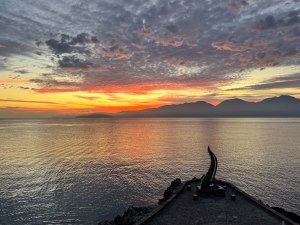
In my later years of college I began reading Nikos Kazantzakis. I had seen the movie “Zorba the Greek” and was profoundly influenced by his other written works, especially his autobiography “Report to Greco.” Less an outline of his life and more an accounting of his spiritual journey and growth, the book set me on fire. He wrote passionately about the connection of spirit and physicality. It spoke to me.
Some fifty years later I finally journeyed to Crete, Kazantzakis’s birthplace. During an evening walk, Peggy and I came upon his grave. Out of all the resting places of influential human beings, this one had a personal significance for me. His epitaph: “I hope for nothing. I fear nothing. I am free.”
We traveled to Crete for both cultural exploration and physical adventuring. The two complemented each other well, and even felt appropriate relative to Kazantzakis’s focus on the fusion of spirit and flesh. The first week we explored western Crete, driving and hiking through the rough countryside. The Samaria Gorge, the second longest gorge in Europe, was a spectacular walk descending 1250 meters over 16 km and ending up at the small roadless coastal village of Agia Roumeli where we took a ferry to a nearby town, transferred to a bus, and were transported back to our starting point. A couple of days later we undertook a second long hike along the coastal E4 footpath. The trail passed by the ancient site of Lissos, a settlement dating back at least to 300 BCE. Many ruins remain from this once important trading and fishing port, all nestled in a tight valley leading down to a small sheltered cove. From there the E4, a long trail traversing a number of European countries, wandered along the coast towards Paleochora affording splendid views of the Libyan sea.
 This past June Peggy and I joined a group of former staff connected with the North Carolina Outward Bound School (NCOBS) and the Nantahala Outdoor Center (NOC) for a rafting trip down the Middle Fork of the Salmon River in Idaho. The Middle Fork is reputed to be one of the most exciting and beautiful whitewater runs in the world, dropping an extraordinary 4000 feet over 104 miles and carving out a channel that is deeper than the Grand Canyon in places. There are over 100 rapids, many rated Class III – IV, and the paddling draws 10,000 visitors each year on a mixture of commercial and private trips. The river corridor goes through the Frank Church – River of No Return Wilderness and is within the largest contiguous area in the lower 48 states without roads.
 When I tune into the news and hear about the latest outrage from the new administration, my kneejerk reaction is to rave and protest against the outrages being perpetrated, and commiserate with like-minded friends. I know I am not alone in this response. I am also aware that these responses, arising reflexively, are not necessarily helpful or constructive.
 In early July, extended family gathered in Maine to celebrate Chuck Hilly’s 100thbirthday. Hale and hearty, Chuck still plays golf several times a week, has a mind as sharp as a tack, and is warm and engaging with both family and friends. It felt like a celebration of all the good that life has to offer, and highlighted the gifts each generation passes on to the next. It was a fitting beginning to a journey to Ecuador and the Galápagos Islands, where life processes and ecological balance are made so explicit both through the natural world and through efforts by concerned humans to promote this balance.


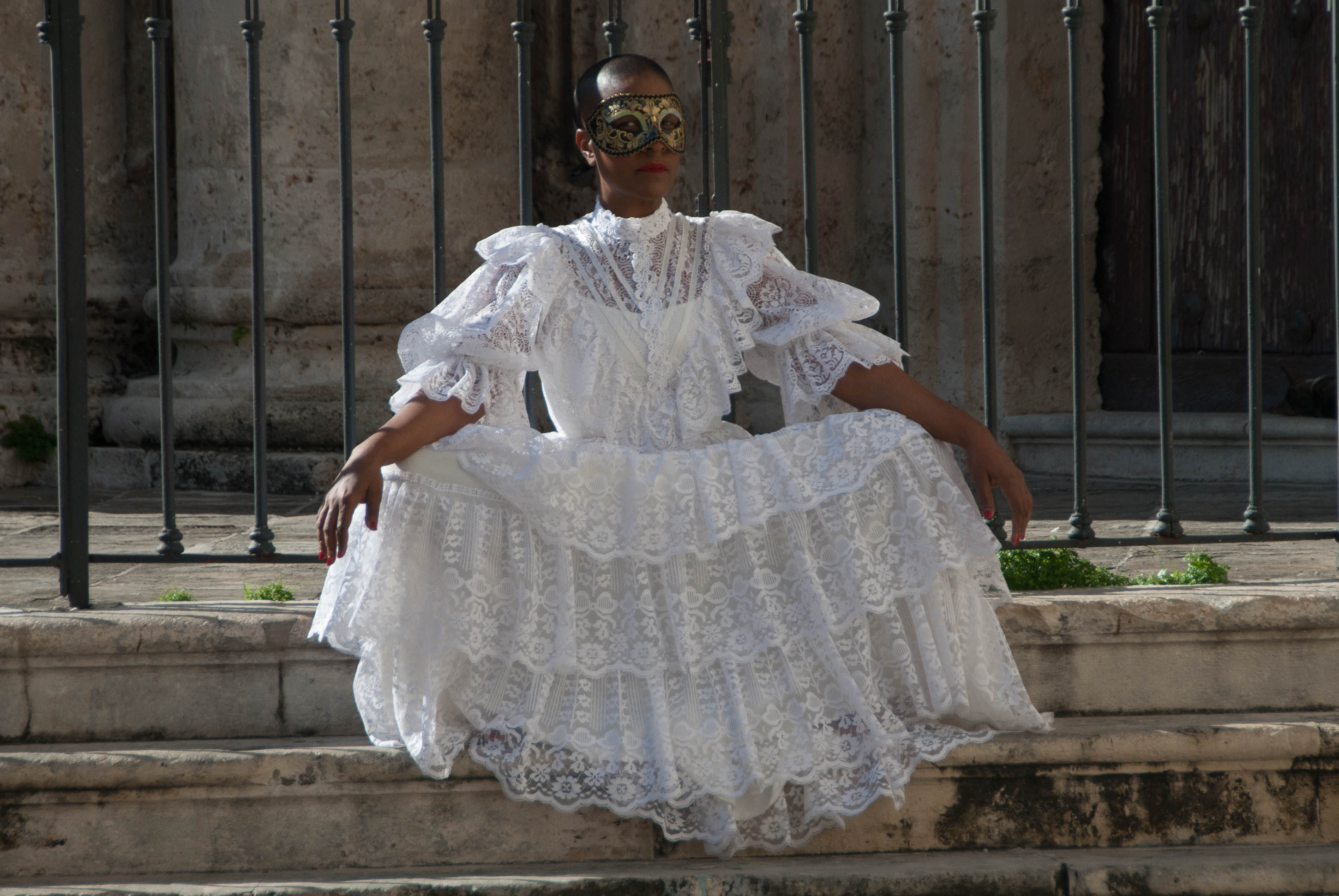 My first memory of Cuba was of the Cuban Missile Crisis. I had just turned eight, and shortly after my birthday the tense standoff with the Russians began. I didn’t understand much except that the Russians, who were the Bad Guys, had placed rockets with atomic bombs in an island country somewhere near Florida called Cuba. It was the era of air raid drills, where we would crawl under our desks and put our heads down between our knees and clasp our hands over our heads. Later, some wag would add the words “… and kiss your a– goodbye….” to this emergency sequence. But at the time I’m sure we were comforted by practicing some tangible act that might save us. Grownups tried to hide their own anxiety, but many children my age and older knew something serious was afoot. Two weeks later, we knew that the immediate threat was over.



 Through the Mind and the Eye